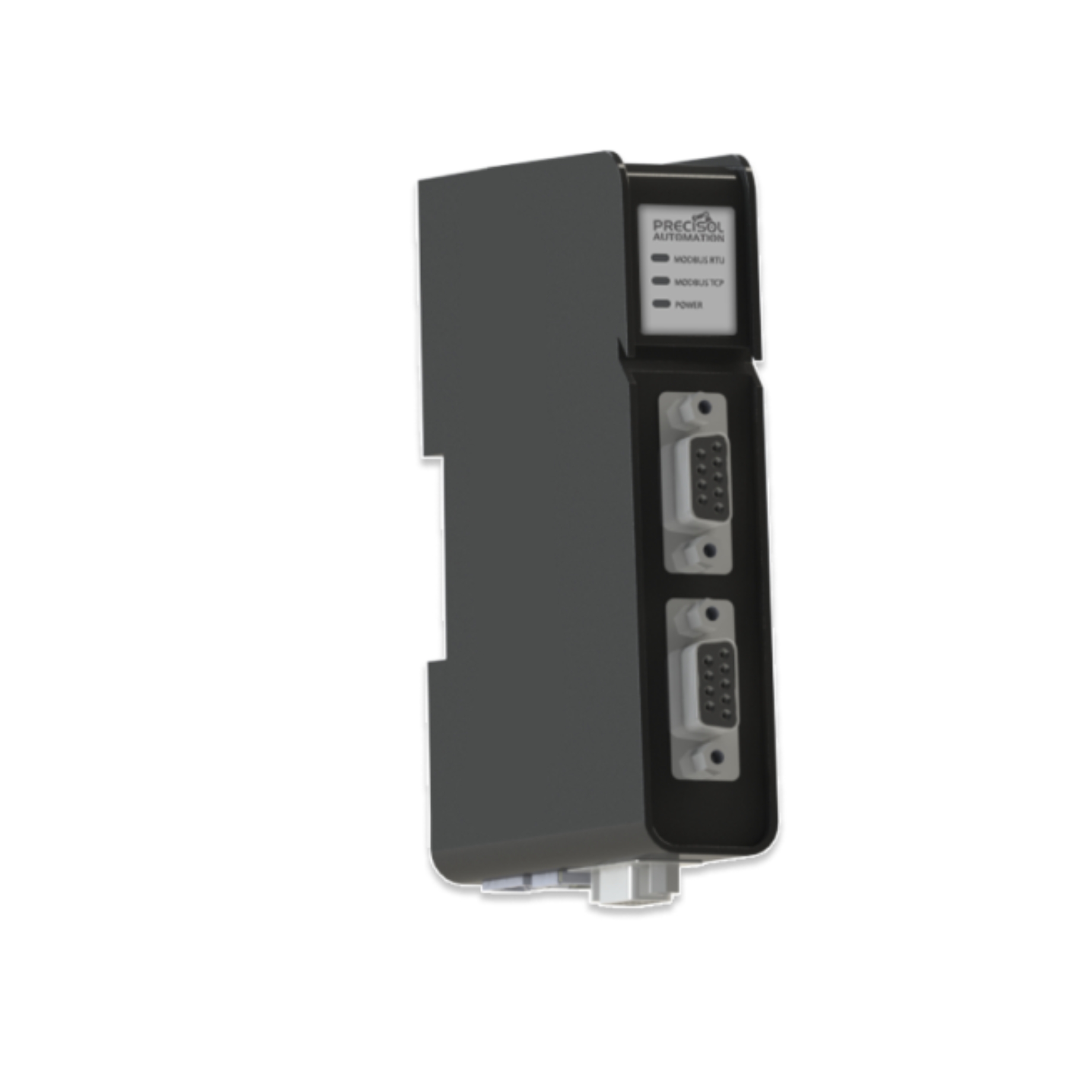
Our Modbus RTU to Modbus TCP Protocol Converter bridges traditional serial-based industrial devices with modern Ethernet-based automation systems. It enables seamless communication between RS485 Modbus RTU field devices such as energy meters, flow meters, temperature controllers, and sensors, and Ethernet-based PLCs, HMIs, SCADA systems, and industrial networks—without requiring any changes to existing equipment.
Acting as an intelligent gateway, the converter translates Modbus RTU data from RS485 into Modbus TCP packets for Ethernet communication, and vice versa. This allows legacy Modbus RTU devices to be easily integrated into modern automation architectures, centralized monitoring systems, and networked control environments with reliable and stable data exchange.
Designed for industrial use, the converter supports a wide range of baud rates, configurable serial parameters, and robust RS485 communication. With easy USB configuration and a standard 12V DC power supply, it offers a cost-effective solution for expanding network connectivity, reducing system upgrade costs, and enabling scalable industrial automation and IIoT applications.

This protocol converter enables seamless communication between Modbus RTU devices using RS485 and Modbus TCP systems over Ethernet. It allows legacy serial field devices to connect effortlessly with modern PLCs, HMIs, and SCADA systems without requiring any modification to existing hardware.
Designed for wide compatibility, the converter supports multiple baud rates and configurable serial parameters, making it suitable for various Modbus RTU devices from different manufacturers. Ethernet connectivity ensures smooth integration into existing LAN and industrial networks with reliable data exchange.
Built for continuous industrial operation, the converter offers stable performance, simple USB-based configuration, and a standard 12V DC power supply. By reusing existing Modbus RTU instruments, it helps reduce upgrade costs while enabling scalable and future-ready automation solutions.


Power Supply: 12V DC
Power Consumption: 1.5A Max @12V
PC Interface: USB Mini B connector
External Interface: DB-9 connector for RS485 interface
Modbus Communication: Modbus RTU via RS485 (2-wire) or Modbus TCP via Ethernet
RS485 Serial Interface: External interface via pluggable terminal connector
Data Bits: 7, 8 bits
Baud Rate: 300, 600, 1200, 2400, 4800, 9600, 14400, 19200, 38400, 57600, 115200 bps
Stop Bits: 1, 2 bits
Parity: None, Odd, even
Modbus TCP Interface: Ethernet (RJ45)
Modbus TCP Port: 502 (Standard for Modbus TCP)
Modbus RTU to TCP Conversion: Bidirectional conversion between Modbus RTU and Modbus TCP protocols
One Unit with IP40 rated ABS plastic enclosure
User Manual
Quick Start Guide
In an industrial facility, multiple field devices such as energy meters, flow meters, temperature controllers, and pressure sensors are installed across the plant and communicate using Modbus RTU over RS485. These devices need to be monitored centrally using a SCADA system, which operates on Modbus TCP over Ethernet. By using the Modbus RTU to TCP Protocol Converter, all RS485-based Modbus RTU devices are connected to the converter, which translates the serial RTU data into Modbus TCP. The SCADA system accesses this data over the Ethernet network in real time, enabling continuous monitoring of process parameters, equipment status, and energy consumption. This setup allows operators to view live data on SCADA dashboards, generate alarms when parameters exceed limits, and store historical data for analysis and reporting.

In modern Building Automation Systems (BAS), various subsystems such as HVAC units, energy meters, lighting controllers, and access control panels often communicate using Modbus RTU over RS485. However, centralized Building Management Systems (BMS) typically operate on Ethernet-based Modbus TCP/IP networks, creating integration challenges between legacy serial devices and modern monitoring platforms. Our Modbus RTU to TCP Converter enables seamless communication by converting serial Modbus RTU data into Modbus TCP, allowing building devices to be integrated directly into the centralized BMS without replacing existing hardware. With this solution, facility managers can monitor and control critical building parameters such as temperature, humidity, energy consumption, and equipment status in real time over cloud networks. It enhances operational efficiency, improves energy management, simplifies maintenance, and provides centralized visibility across the entire facility.

A Modbus RTU to TCP Protocol Converter converts Modbus RTU over RS485 into Modbus TCP over Ethernet, enabling communication between legacy field devices and modern automation systems like PLCs and SCADA.