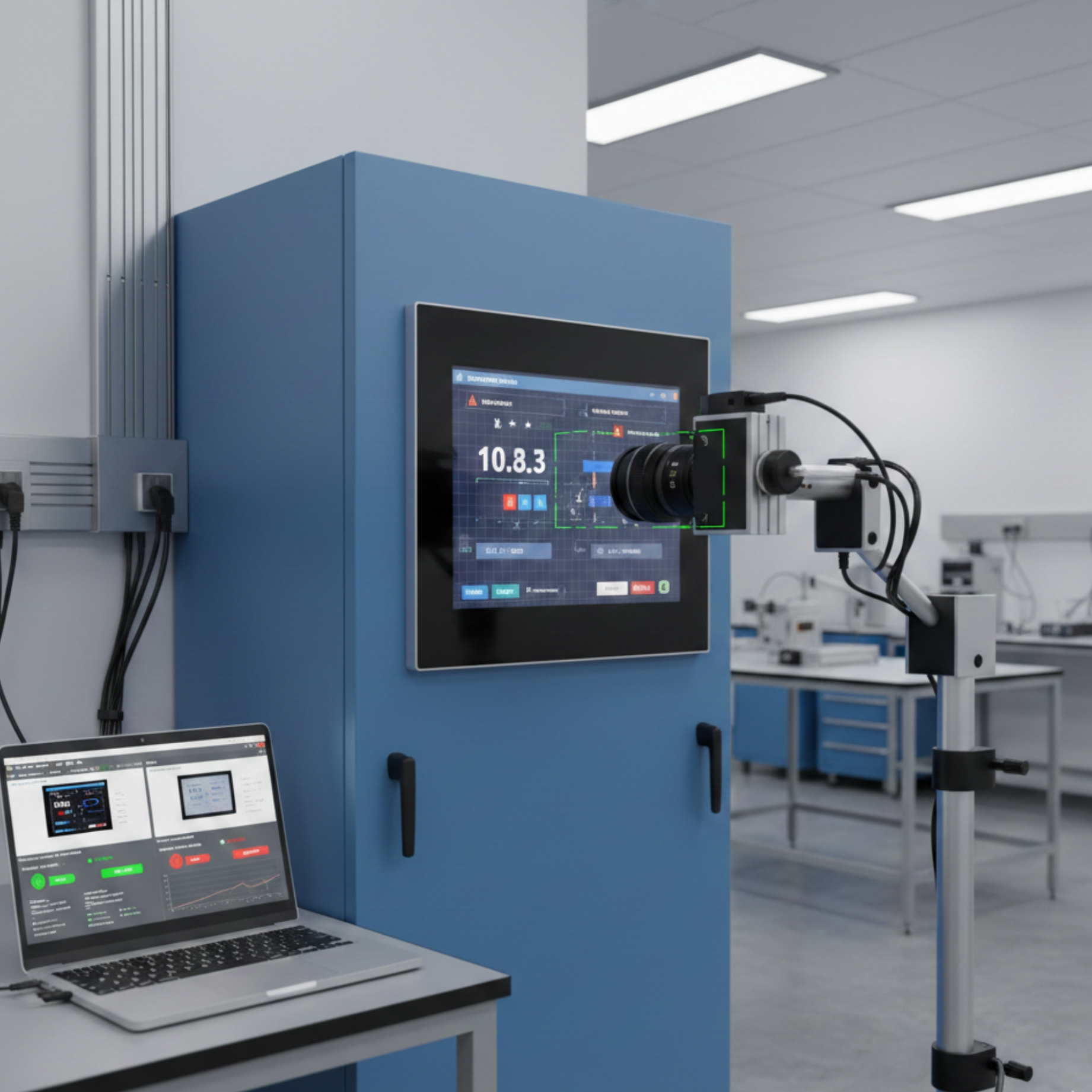
HMI Validation System is a professional CAN-based validation solution designed to test and verify the functional behavior of Human Machine Interfaces (HMIs). This system uses controlled CAN bus signal simulation and monitoring to validate whether the HMI responds correctly to different operating conditions. The solution works as a test environment where predefined or custom CAN scenarios are applied to the HMI under test. Based on these CAN inputs, the system verifies display indications, warning messages, and touch responses for correctness, timing, and logic. This approach ensures that the HMI behavior matches the intended CAN specifications.
The HMI Validation System eliminates the dependency on vehicle-based testing by providing a repeatable and controlled CAN testing setup. It enables engineers to detect functional issues, logic mismatches, and response delays early in the development and validation cycle.
This system is suitable for automotive instrument clusters, infotainment HMIs, commercial vehicle dashboards, and industrial HMI panels, and can be used across R&D, validation, and production testing environments. By enabling structured and automated validation, it improves product quality, reduces testing time, and minimizes field-level failures.

The system uses controlled CAN bus signal simulation to validate complete HMI behavior, including display indications, warning messages, and response logic, ensuring alignment with defined CAN specifications.
Provides a structured test environment to validate HMIs without the need for an actual vehicle, allowing engineers to apply repeatable CAN scenarios and verify functionality under different operating conditions.
Delivers consistent and repeatable validation outcomes by automating CAN-based test scenarios, helping reduce manual effort, minimize errors, and improve overall HMI quality.


Communication Protocol: MQTT is used to receive detection screen information from the testbot and to transmit the detected results back to the testbot in JSON format for validation.
Connector type: DB9
CAN Baud Rates: 5Mbps
CAN Database Support:
Repition ms : Configurable
CAN ID used for fuel gauge: 0x2BD
CAN ID used for teletale : 0x2BC
Test Modes: The test is performed using a live camera stream. Information is extracted from the live camera frames and processed to generate predictions.
Validation Type: The system recognizes and validates dial, image, and text widgets.
Operating Environment: Jetson AGX board, Python, AI models, with inference executed on GPU.
One Unit with IP40 rated ABS plastic enclosure
User Manual
Quick Start Guide
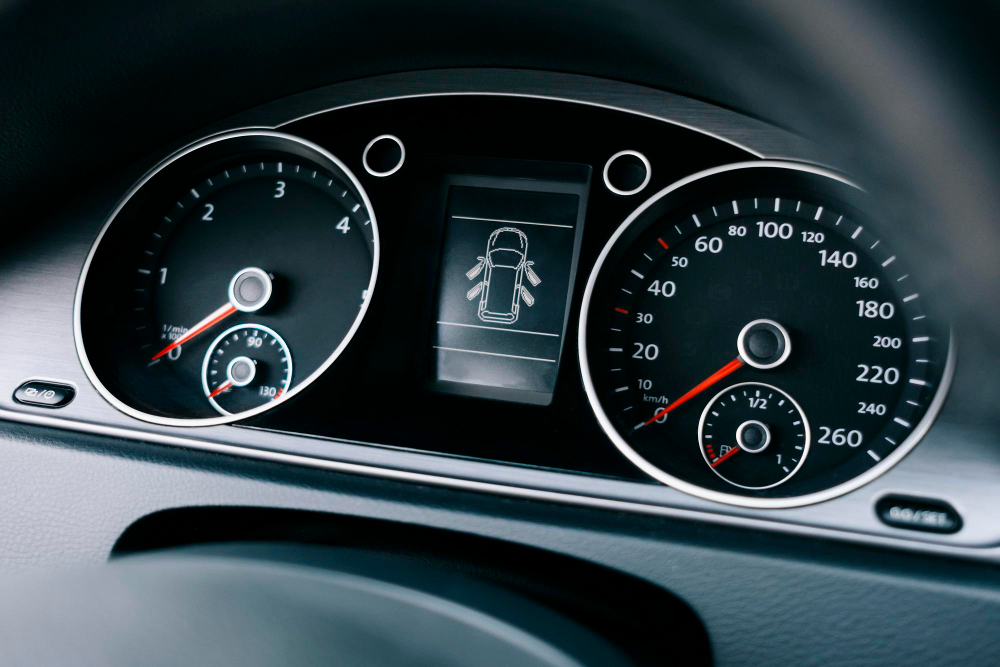
The HMI Validation System is used to test and validate automotive instrument clusters in real-time by simulating CAN bus messages that mimic actual vehicle conditions. This allows engineers to verify that all gauges, warning lights, indicators, and digital displays respond correctly under various scenarios such as acceleration, braking, engine start/stop, and fault conditions. By providing a controlled and repeatable CAN environment, the system ensures accurate functional validation without the need for a running vehicle, enabling early detection of logic errors, display mismatches, or delayed responses. This accelerates development, reduces testing time, and guarantees that the instrument cluster meets OEM quality standards before deployment.

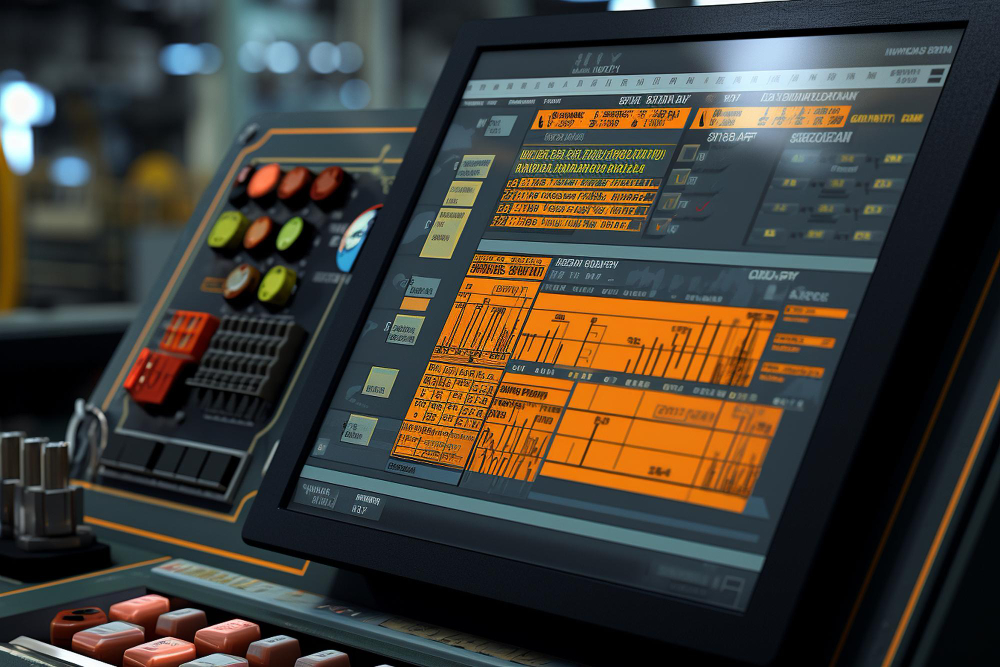
HMI Validation System provides a comprehensive solution for testing and validating industrial machine operator panels and dashboards. By simulating CAN bus signals, the system ensures that all display elements, indicators, warning lights, alarms, and touch inputs function correctly under a variety of operating conditions. Engineers can replicate real-world machine scenarios such as startup sequences, fault conditions, emergency stops, and process variations, all in a controlled and repeatable environment. This enables early detection of logic errors, display mismatches, or delayed responses, improving overall machine safety, operator efficiency, and product reliability. By using this system, manufacturers and R&D teams can streamline validation processes, reduce testing time, and ensure consistent HMI performance before the equipment is deployed on the production floor or in the field.

The HMI Validation System is a CAN-based solution designed to test and validate the functional behavior of Human Machine Interfaces (HMIs) in automotive, industrial, and commercial applications.