Event Anomaly Detection
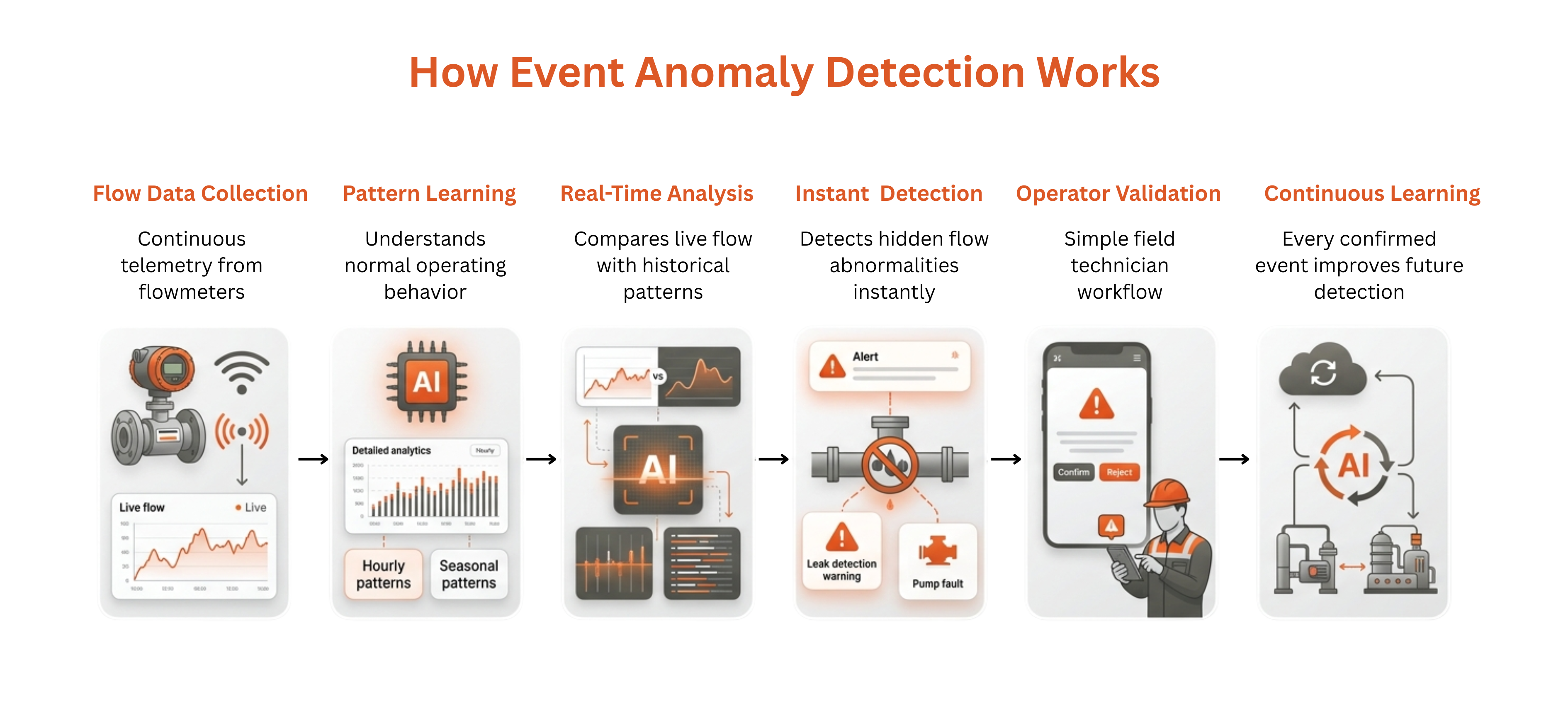
PreciView Event Anomaly Detection helps industries identify hidden flow issues before they turn into costly operational failures. Unlike traditional threshold-based monitoring systems that only react after predefined limits are crossed, PreciView receives data from the cloud and intelligently processes real-time flow behavior within the mobile application to deliver meaningful insights and monitoring. By studying operational flow patterns and historical equipment behavior, the system can detect abnormal conditions much earlier and provide immediate visibility to field teams.
In most industrial flow systems, failures rarely happen without warning signs. Gradual flow reduction, unusual fluctuations, delayed demand peaks, or irregular overnight patterns often appear long before a major issue occurs. However, these subtle variations may still remain inside acceptable operating thresholds, making them invisible to conventional alarm systems. PreciView goes beyond fixed-limit monitoring by learning normal operating behavior and identifying pattern-based anomalies that traditional systems cannot detect.
This intelligent approach enables maintenance teams to detect leaks, blockages, pump wear, and abnormal flow behavior earlier — sometimes hours or even days before operations are impacted.