Revolutionizing Cold Chain Integrity with Wireless Temperature Monitoring
In the modern logistics landscape, maintaining precise environmental conditions is no longer a luxury—it is a regulatory and operational necessity. This case study explores how a mid-sized third-party logistics (3PL) provider, specialized in pharmaceutical and perishable goods, integrated the Precisol Automation Wireless Temperature Sensor to eliminate manual logging errors, reduce spoilage, and achieve 100% regulatory compliance.
The Challenge: The High Cost of Thermal Instability
Our client operated a 150,000-square-foot facility divided into multiple temperature zones, ranging from ambient storage to ultra-low temperature (ULT) freezers. Before partnering with Precisol Automation, the facility relied on a combination of wired sensors and manual data logging. This legacy system presented three critical failure points:
- Blind Spots: Wired sensors were fixed in position. As warehouse racking configurations changed, micro-climates or hot spots developed that the sensors couldn't reach.
- Labor Inefficiency: Staff spent approximately 10 hours per week manually recording temperatures to satisfy FDA and GDP (Good Distribution Practice) requirements.
- Delayed Alerts: The system only alerted staff to deviations when they were physically near a control panel, leading to several near-miss incidents where compressor failures were discovered hours too late.
Our Solution: The Precisol Wireless Temperature Sensor
The client implemented the Precisol Wireless Temperature Sensor to replace their manual processes with a fully automated, end-to-end monitoring pipeline. This system doesn't just record data; it creates a continuous loop of visibility from the warehouse floor to the manager’s smartphone. How the Data Flow Works:
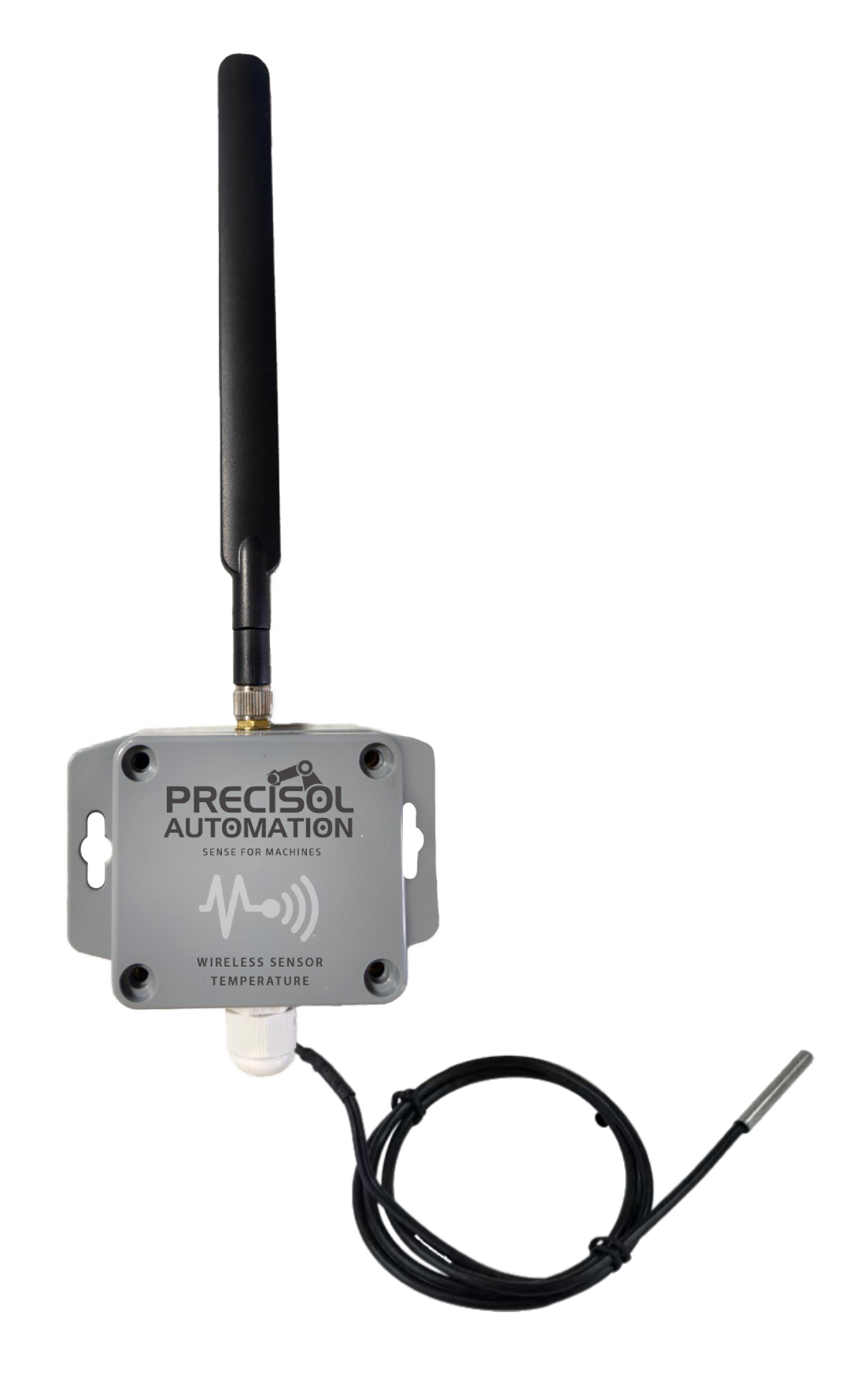
- High-Precision Detection: The wireless sensors, strategically placed throughout the facility, continuously detect ambient temperature with industrial-grade accuracy.
- Seamless Transmission: Using sub-GHz wireless technology, the sensors transmit this live data to the Our Wireless Gateway. This frequency is specifically chosen to penetrate heavy metal racking and dense inventory that typically blocks Wi-Fi or Bluetooth signals.
- Cloud Integration: The Gateway acts as the central hub, collecting data from over 50+ sensors and instantly pushing it to the PreciCloud Dashboard via a secure internet connection.
- Remote Monitoring & Control: Once the data hits PreciCloud, stakeholders can access real-time analytics, historical logs, and system health from any location in the world. This allows for total remote management and instant intervention if temperatures drift.
Key Technical Advantages:
- Sub-GHz RF Connectivity: Unlike standard sensors that struggle with interference, Precisol’s long-range RF ensures 100% data packet delivery even in RF-noisy industrial environments.
- Ultra-Low Power Consumption: With a battery life exceeding 5 years, the sensors provide set-and-forget reliability, virtually eliminating routine maintenance costs.
- The PreciCloud Advantage: The intuitive dashboard provides a centralized view of the entire cold chain, offering custom alerts, automated PDF reporting for audits, and multi-user access levels.
Results and Business Impact
To optimize data efficiency and establish a truly predictive system, The Client heavily leveraged the gateway's integrated Edge Intelligence. This local processing was crucial for avoiding the cost and complexity of transmitting high-volume, repetitive 'normal' data. Engineers programmed specific logic rules directly onto the device, effectively implementing edge computing for vibration and temperature anomaly detection in manufacturing:
- 95% Reduction in Spoilage Risk: Within the first month, the system detected a refrigerant leak in a cooling unit at 2:00 AM on a Sunday. The automated alert allowed the team to move $200,000 worth of temperature-sensitive biologics to a backup freezer before the internal temperature reached the danger zone.
- Audit-Ready Compliance: The manual logbooks were replaced by automated, encrypted digital reports. During a recent ISO 9001 audit, the client was able to generate a comprehensive temperature history for any specific pallet location within seconds.
- Operational Cost Savings: The elimination of manual logging saved the company an estimated $12,000 annually in labor costs. Furthermore, the data insights allowed the facility to optimize its HVAC cycles, leading to a 7% reduction in energy consumption.

The transition from reactive manual monitoring to proactive wireless sensing has transformed the client’s warehouse from a potential liability into a competitive advantage. By leveraging Precisol Automation’s robust wireless technology, the facility now offers its customers Total Thermal Visibility, ensuring that every product—from life-saving medicine to premium produce—remains at its peak efficacy and quality.