Enhancing Industrial Pipeline Integrity with Wireless Pressure Monitoring Solutions
In the modern industrial landscape, maintaining the integrity of pipeline networks is critical for operational efficiency, environmental safety, and regulatory compliance. Traditional wired monitoring systems often face significant hurdles, including high installation costs, vulnerability to physical damage, and limited flexibility in remote or hazardous locations. This case study explores how the deployment of the Precisol Wireless Pressure Sensor revolutionized pipeline monitoring for a mid-sized petrochemical facility, leading to a 30% reduction in maintenance costs and a 15% increase in leak detection sensitivity.
Introduction: The Challenge of Pipeline Monitoring
Industrial pipelines are the veins of the manufacturing and energy sectors. However, they are prone to pressure fluctuations, corrosion, and mechanical stress. A minor leak, if undetected, can escalate into a catastrophic failure.
The subject of this study, a regional petrochemical distributor, struggled with a legacy monitoring infrastructure. Their existing system relied on manual inspections and a limited number of wired sensors. The primary challenges included:
- High Infrastructure Costs: Trenching and cabling for new sensors across a 5-mile facility were cost-prohibitive.
- Data Gaps: Large sections of the pipeline remained blind spots due to the difficulty of wiring sensors in congested or hard-to-reach areas.
- Response Time: Delayed data transmission meant that pressure drops were often identified hours after an incident occurred.
The Precisol Integrated Ecosystem: From Sensor to Smartphone
To provide a foolproof monitoring solution, Precisol Automation doesn't just offer a device; it offers a complete, closed-loop monitoring ecosystem. This architecture ensures that data flows seamlessly from the physical pipeline to the decision-maker’s pocket.
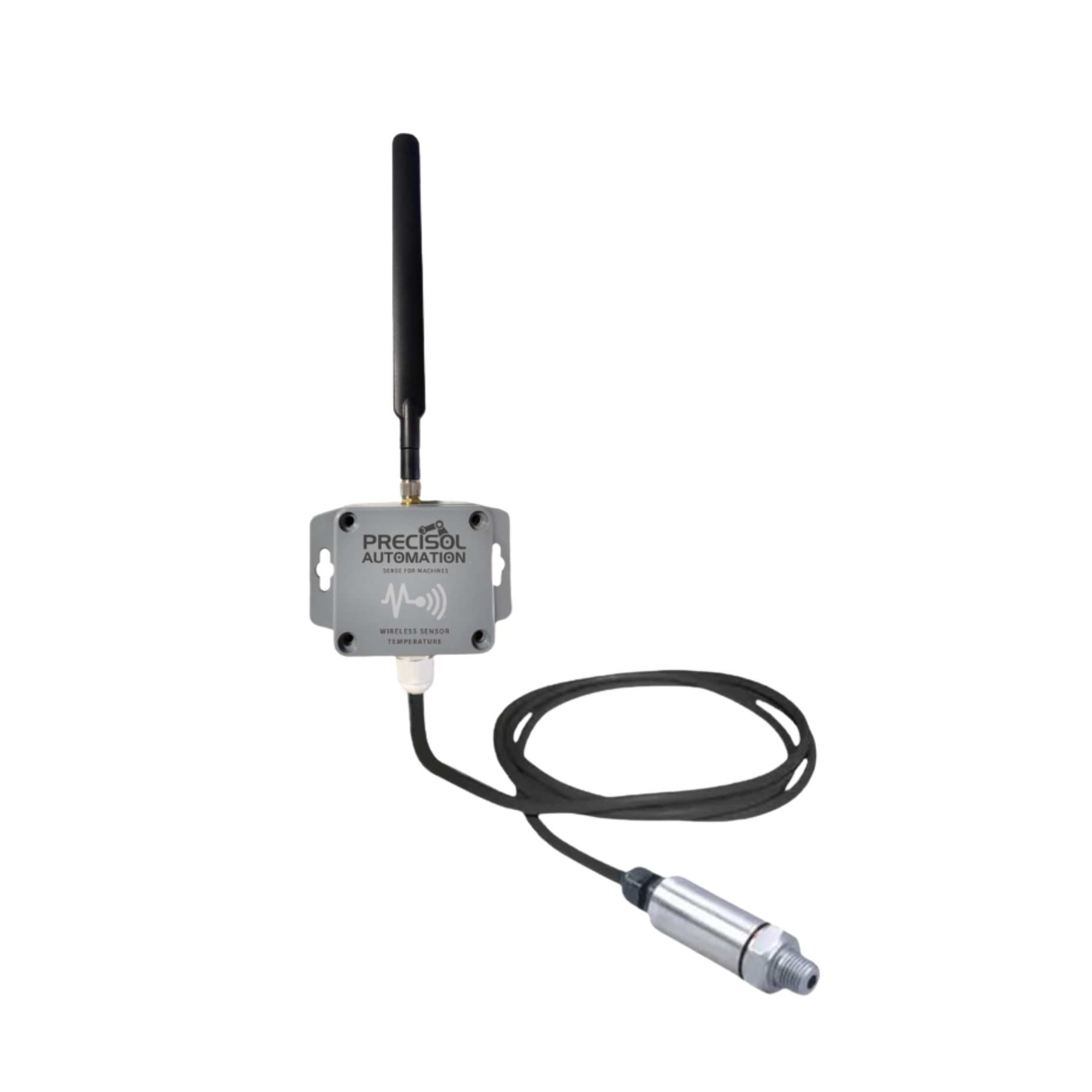
- The Edge: Precisol Wireless Pressure Sensors: The process begins at the source. Our high-precision wireless sensors are installed at critical junctions along the industrial pipeline.
- High-Fidelity Sensing: These sensors are engineered to detect minute pressure fluctuations that manual gauges might miss.
- Zero-Infrastructure Deployment: Because they are battery-powered and wireless, there is no need for expensive trenching or wiring, making them ideal for existing brownfield projects.
- The Bridge: Industrial Wireless Gateway: Data captured by the sensor is transmitted to a centralized Wireless Gateway. This gateway acts as the brain on the field.
- Robust Data Aggregation: A single gateway can manage and collect data from dozens of sensors across a wide radius.
- Secure Transmission: Using industrial-grade encryption, the gateway ensures that sensitive operational data is protected while being pushed to the cloud via 4G, or Wi-Fi.

- Live Pressure Mapping: View real-time pressure trends across the entire facility from Precicloud.
- Smart Threshold Management: Users can define Safe Zones for pressure. If the pressure exceeds or falls below these predefined Threshold Limits, the system identifies it as an anomaly instantly.
- Data Analytics: Analyze historical trends to identify recurring issues, helping in predictive maintenance and regulatory reporting.
- On-the-Go Monitoring: Whether you are on the factory floor or traveling, you have the entire pipeline status in the palm of your hand.
- Instant Push Notifications: The moment a threshold is breached, the app sends a Real-Time Push Notification. This ensures that the field team can react within seconds—not hours—preventing leaks or pipe bursts.
- Alert History: Keep track of every alarm triggered, who acknowledged it, and when the issue was resolved.
Results and Impact
- Instant Leak Detection: Within the first month of operation, the Precisol sensors detected a microscopic pressure drop in a subterranean section of the pipeline. Investigation revealed a hairline crack caused by soil shifting. By addressing the issue immediately, the company avoided an estimated $50,000 in environmental cleanup costs and lost product.
- Significant Cost Savings: The total cost of the wireless installation was approximately 60% lower than the quote for a comparable wired system. The facility saved on copper wiring, conduit labor, and the avoidance of hot work permits required for traditional installations in hazardous zones.
- Predictive Maintenance Insights: The continuous stream of high-resolution data allowed the engineering team to transition from reactive to predictive maintenance. By analyzing pressure patterns, they identified a failing pump that was causing upstream vibrations, allowing for a scheduled replacement during off-peak hours.
The transition to Precisol Wireless Pressure Sensors has proven that wireless technology is no longer just a convenient alternative but a superior industrial standard. For pipeline monitoring, the ability to deploy sensors rapidly, coupled with high-precision data transmission, ensures that facilities can operate safely, sustainably, and profitably.
As industrial IoT (IIoT) continues to evolve, the integration of wireless pressure sensing will remain a cornerstone of the Smart Factory evolution, providing the visibility needed to protect both assets and the environment.