The Digital Backbone: How CAN Telematics Gateways Revolutionize Public Bus Fleet Management
Public transport buses are the pulsating arteries of any modern city, demanding uncompromising reliability, safety, and efficiency. Fleet managers operate under immense pressure to minimize downtime, optimize fuel consumption, and ensure scheduled operations. In this demanding environment, traditional reactive maintenance models are costly and inadequate. The solution lies in advanced digitalization, specifically through the deployment of intelligent telematics systems. At the core of this transformation is the CAN Telematics Gateway, a device that acts as the digital backbone, bridging the gap between a vehicle's intricate electronic control units (ECUs) and the fleet management cloud. By tapping into the Controller Area Network (CAN) bus, this technology provides the deep, actionable insights necessary to run a smart, high-performing public bus fleet.
What is a CAN Telematics Gateway?
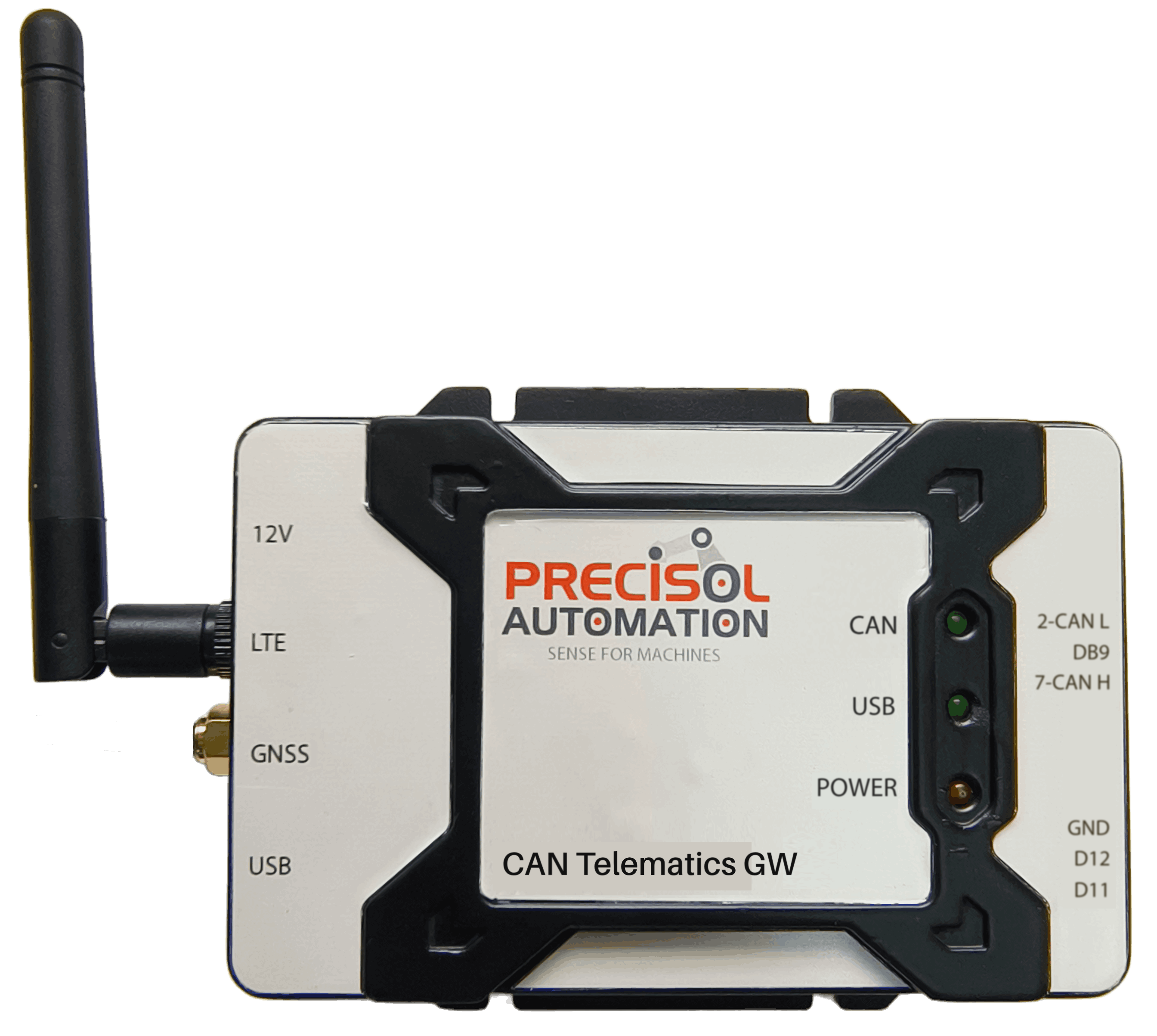
A CAN Telematics Gateway is an advanced device, such as the solution offered by Precisol Automation, designed to connect directly to a vehicle’s internal CAN communication network and transmit the extracted data to an external telematics platform via cellular connectivity (e.g., LTE CAT 1). Unlike simpler trackers, the gateway is a sophisticated data processor. It captures the raw, cryptic CAN messages (IDs and payloads) traveling across the bus. To turn this raw data into meaningful information, the gateway relies on a DBC file (Database Container). This file defines the structure of the CAN messages, enabling the gateway to decode signals—such as speed, engine RPM, or fault codes—into human-readable physical values. This crucial decoding function is what elevates it from a simple data logger to a vital intelligence hub for CAN-based telematics solutions for public bus fleets. Once decoded, the device transmits this critical operational and diagnostic information securely to the cloud, forming the foundation of a real-time fleet management system.
Key Challenges in Bus Fleet Management
Managing large public bus fleets presents unique operational hurdles that significantly impact service quality and budget:
- Unplanned Downtime: A bus breaking down mid-route leads to frustrated commuters, severe scheduling delays, and high towing/emergency repair costs.
- Fuel and Energy Inefficiency: Poor driving habits, engine idling, or suboptimal route planning drive up operating expenses, especially when dealing with hundreds of vehicles.
- High Maintenance Costs: Relying on fixed schedules or failure-based repairs leads to unnecessary parts replacement or costly catastrophic failures.
- Driver Behavior & Safety: Ensuring drivers adhere to safety standards (speed limits, harsh braking/acceleration) is essential for passenger comfort and accident prevention.
- Regulatory Compliance: Meeting strict environmental and safety regulations requires accurate and auditable data logging from every vehicle.
Why CAN-Based Telematics is the Best Solution for Buses
Public transit buses are complex machines heavily reliant on the CAN bus for communication between the Engine Control Unit (ECU), transmission, brakes, and other subsystems. CAN-based telematics offers an unparalleled depth of insight compared to basic GPS/OBD-II tracking:
- Deep Diagnostic Access: It provides direct access to the vehicle's heart, retrieving manufacturer-specific diagnostic trouble codes (DTCs) before they trigger catastrophic failures.
- Standardization in Heavy Vehicles: The CAN protocol (specifically Classical CAN 2.0 supported by Precisol’s gateway) is the industry standard for heavy-duty vehicles, ensuring comprehensive compatibility.
- Comprehensive Data Capture: By utilizing the DBC file, the system captures hundreds of specific parameters—data that is simply unavailable via standard external sensors or basic telematics. This level of detail makes it the superior choice for professional fleet operations.
Data Parameters Captured via CAN
The precise decoding capability of the CAN Telematics Gateway allows fleet managers to monitor a vast array of critical parameters in real-time, delivering the depth of data needed for modern predictive maintenance for city transit buses using CAN data. Implementation and Data Flow:
- Gateway Installation: The compact, robust, IP40-rated Precisol CAN Telematics Gateway was physically connected to each bus’s J1939 diagnostic port (the heavy-duty vehicle standard) or directly to the CAN bus.
- DBC File Decoding: The operator uploaded the vehicle’s specific DBC (Database Container) file into the gateway's configuration tool (PreciCon). This file is crucial as it acts as a dictionary, allowing the gateway to decode the raw CAN messages (IDs and payloads) into human-readable physical values, such as engine RPM, coolant temperature, and critically, HVAC compressor pressure and clutch cycles.
- Real-Time Data Transmission: Using its integrated LTE cellular modem, the gateway securely transmitted this decoded, time-stamped, and geolocated data to the centralized cloud dashboard, PreciCloud, in real-time.
Key Benefits of CAN Telematics Gateway for Bus Fleets
Integrating a CAN datalogger into your generator validation workflow offers a host of significant benefits that improve accuracy, reduce costs, and enhance overall operational safety and efficiency.
- Drives Predictive Maintenance, Eliminating Downtime: The gateway extracts deep Diagnostic Trouble Codes (DTCs) and engine parameters directly from the CAN bus. This allows fleet managers to schedule maintenance based on actual component wear (e.g., rising engine temperatures or specific fault code trends), moving beyond mileage-based schedules. This drastically reduces the risk of unscheduled roadside breakdowns, maximizing service availability.
- Maximizes Fuel/Energy Efficiency and Lowers Costs: By monitoring real-time data on engine load, RPM, and instantaneous fuel consumption, the system identifies and corrects inefficient driver behaviors (like excessive idling or harsh acceleration). For EV fleets, it optimizes battery usage and charging cycles, leading to significant and measurable reductions in operating expenditure (OPEX).
- Enhances Passenger Safety and Driver Behavior: The system continuously records harsh braking, aggressive cornering, and speeding events. Immediate alerts facilitate timely intervention, while historical data supports targeted driver coaching. This focus on safer driving habits improves passenger comfort and safety and reduces the likelihood of costly accidents and insurance claims.
- Ensures Data Integrity via DBC File Decoding: The gateway utilizes the specific DBC file for each bus type to accurately decode raw CAN messages into meaningful physical values (e.g., 500 units becomes 1500 RPM). This ensures the fleet manager receives highly reliable, vehicle-specific data, which is essential for audit, warranty claims, and precise diagnostics.
- Provides Real-Time Remote Diagnostics and Management: Data is transmitted via cellular connectivity to a cloud platform (like PreciCloud), allowing managers to monitor the entire fleet’s health and location from anywhere. This remote capability includes receiving instant alerts for critical faults, and performing Over-The-Air (OTA) updates and configuration changes, drastically improving responsiveness and fleet management scalability.
The future of public transport is intelligent, connected, and predictive. The CAN Telematics Gateway is the essential hardware enabling this evolution. By offering unparalleled access to a bus’s internal diagnostic and operational data—facilitated by the technical excellence of platforms like Precisol Automation’s solution—fleet managers are equipped with the deep insights necessary to overcome traditional challenges. Moving forward, the strategic use of DBC file decoding in bus fleet management gateways and cellular connectivity will be the defining factor that separates efficient, sustainable public transport networks from those struggling with escalating costs and unreliable service. Investing in this technology is not just an upgrade; it is a fundamental shift toward operational excellence.