Powering Up with Precision: A Guide to Generator Set Performance Validation Using a CAN Datalogger
In a world where uninterrupted power is not a luxury but a fundamental necessity, the reliability of generator sets is paramount. From hospitals and data centers to industrial complexes and emergency response systems, a generator's failure can have catastrophic consequences. To guarantee peak performance and unwavering reliability, rigorous generator set performance validation is indispensable. This process traditionally involved cumbersome, manual methods that were often inefficient, prone to error, and lacked the depth of data required for true diagnostic insight. However, the advent of sophisticated data acquisition tools, particularly CAN bus dataloggers, has revolutionized this field. By harnessing the power of a tool like the Precisol CAN datalogger, engineers can now conduct comprehensive, data-driven validation with unparalleled accuracy and efficiency.
The Role of the Precisol CAN Datalogger in Modern Testing
The modern generator set is a complex, electronically controlled system. At its heart is the Controller Area Network (CAN) bus, an industry-standard communication protocol that allows various components—such as the engine control unit (ECU), alternator, and other sensors—to communicate with each other. This communication adheres to protocols like SAE J1939, which broadcasts real-time operational data. This is where a specialized tool like the Precisol CAN datalogger becomes a game-changer.
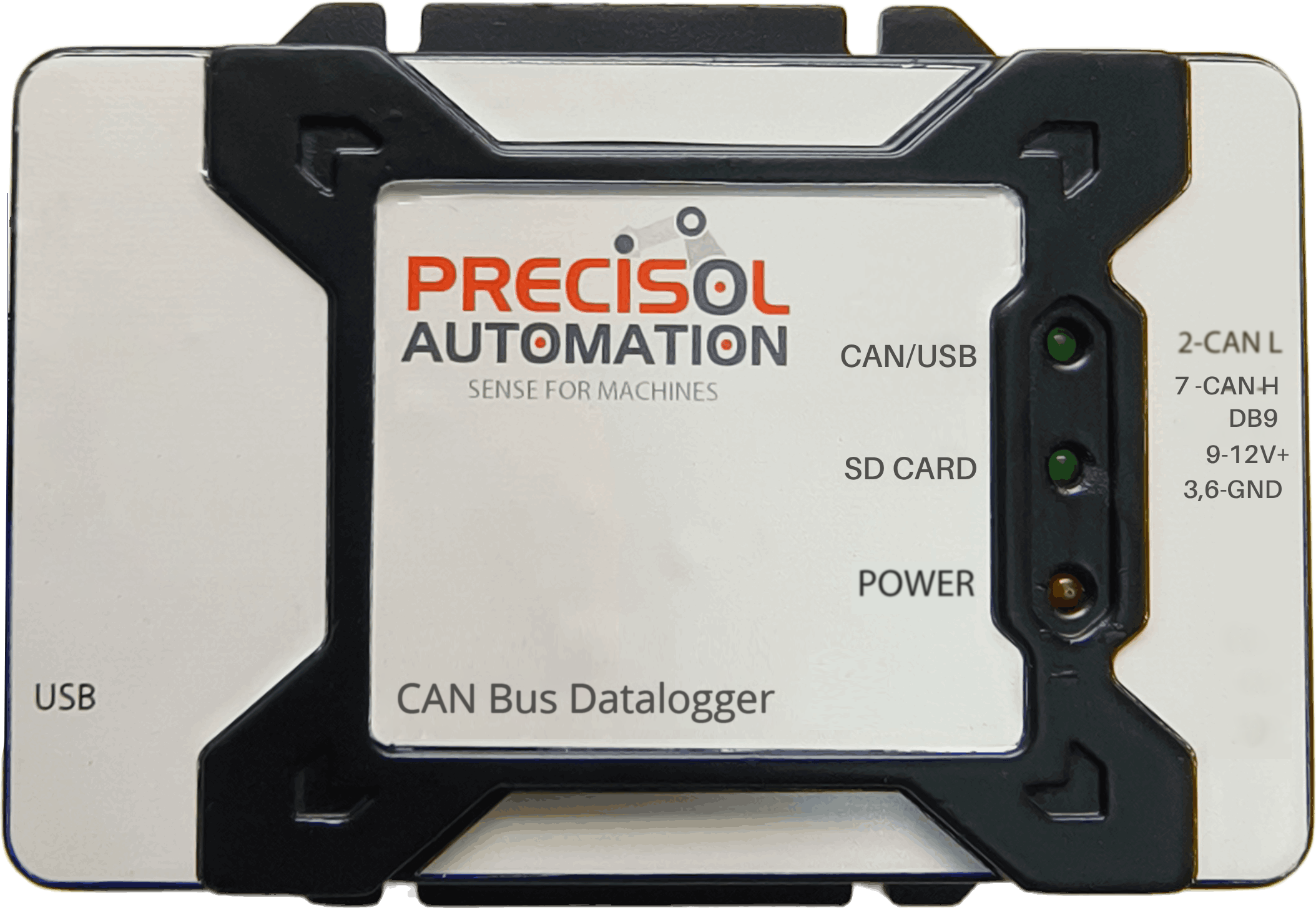
The Precisol CAN datalogger is a compact, standalone device engineered to acquire and record raw CAN bus data directly from the source. It functions as a digital black box for your generator, capturing a continuous stream of critical performance metrics. Unlike outdated methods that rely on spot checks or limited sensor readouts, the datalogger intercepts every piece of information transmitted on the CAN bus. This includes a wealth of parameters vital for performance validation: engine speed, fuel consumption, oil pressure, coolant temperature, alternator voltage, and a multitude of diagnostic trouble codes (DTCs).
Its design for durability and portability means it can be installed quickly and discreetly in the field. With a simple four-wire connection, it taps into the generator’s data stream, eliminating the need for complex wiring setups or expensive, dedicated testing equipment. Once installed, it operates independently, securely storing encrypted data on an internal microSD card. This ensures that even in remote or challenging environments, a comprehensive record of the generator’s performance is being meticulously captured, ready for later download and analysis.
The Data-Driven Validation Process
The process of validating a generator set using a CAN datalogger is streamlined and methodical, shifting the focus from manual data collection to intelligent data analysis.
- Connection and Configuration: The first step involves physically connecting the Precisol CAN datalogger to the generator's J1939 port. The device is then configured using the companion software, where the user can specify the data logging parameters, such as the sampling rate and the specific Parameter Group Numbers (PGNs) to be recorded. This targeted approach ensures that the logger captures only the most relevant data, optimizing memory usage and simplifying post-analysis.
- Performance Run and Data Logging: With the datalogger in place, a performance test is conducted. This often involves a load bank test, which simulates real-world electrical loads and pushes the generator to its operational limits. Throughout this run, the Precisol datalogger continuously records all selected parameters from the CAN bus. This high-frequency data capture is crucial for assessing transient responses, such as how the generator’s voltage and frequency react to sudden load changes. These transient behaviors are often missed by manual readings but are critical for ensuring the generator can handle the dynamic demands of its intended application.
- Data Retrieval and Analysis: After the test, the datalogger's internal storage is accessed via a USB connection, and the data files are downloaded in industry-standard formats like .CSV or .MF4. These files can then be imported into powerful data analysis software for a deep dive into the generator’s performance. Engineers can plot key parameters over time, identify performance deviations, correlate specific events (like a load spike) with the generator's response, and pinpoint potential issues before they lead to a critical failure. This detailed, empirical data provides irrefutable evidence of the generator's health and compliance.

Benefits of Using CAN Dataloggers in Generator Testing
Integrating a CAN datalogger into your generator validation workflow offers a host of significant benefits that improve accuracy, reduce costs, and enhance overall operational safety and efficiency.
- Enhanced Accuracy and Resolution: A datalogger captures data at a far higher frequency than a human can. This provides a high-resolution snapshot of the generator's performance, revealing subtle fluctuations and momentary transients that are impossible to detect with a multimeter or manual observation. The data is pulled directly from the ECU, bypassing potential inaccuracies from external sensors.
- Unattended and Continuous Monitoring: Once set up, the datalogger can operate independently for extended periods, from a single test run to weeks or months of continuous monitoring. This is particularly valuable for diagnosing intermittent issues that may only occur under specific, rare conditions. It allows for a more comprehensive and realistic assessment of long-term reliability.
- Streamlined Compliance and Reporting: For many industries, regular generator testing is a regulatory requirement. The Precisol CAN datalogger provides a comprehensive, timestamped record of every test run. The easily exportable .CSV files provide a detailed log that can be used to generate clear, verifiable reports for regulatory bodies, simplifying the compliance process and ensuring a robust paper trail.
- Proactive Maintenance and Predictive Diagnostics:By analyzing the logged data, engineers can identify trends that indicate impending issues. A gradual increase in coolant temperature, a slight drop in voltage stability over time, or an increase in fuel consumption can all be early warning signs of a failing component. This allows for a proactive maintenance strategy instead of a reactive one, preventing costly and disruptive failures.
- Cost and Time Efficiency: The automation offered by a CAN datalogger significantly reduces the time and labor required for validation. Instead of having a technician manually record readings at multiple intervals, the datalogger handles the data collection, freeing up personnel for more analytical tasks. This efficiency translates directly to reduced operational costs.
Power generator set performance validation is a critical practice for ensuring safety, reliability, and regulatory compliance. The traditional methods are no longer sufficient to meet the demands of modern, complex generator systems. The Precisol CAN datalogger, with its ability to capture high-fidelity, comprehensive data directly from the CAN bus, represents a powerful leap forward. By moving from manual guesswork to automated, data-driven diagnostics, engineers can achieve unparalleled precision in their validation efforts. This not only guarantees the reliable operation of essential power systems but also provides a clear path to proactive maintenance and smarter asset management. Investing in the right technology, such as a CAN bus datalogger for generator testing, is the definitive step towards ensuring your power generation infrastructure is both resilient and ready to perform when it matters most.